While South Korea’s National Health Insurance (NHI) is excellent, it doesn’t cover everything. High-cost treatments such as MRIs, ultrasounds, and specialized injections—often categorized as “Non-reimbursable” (Bi-geub-yeo)—must be paid entirely out of pocket. This is where Private Indemnity Health Insurance (commonly known as “Silbi”) comes in.
For global professionals and students, having Silbi is the ultimate financial safety net. Based on the 2026 updated policies, here is how you can secure your health and your finances in Korea.
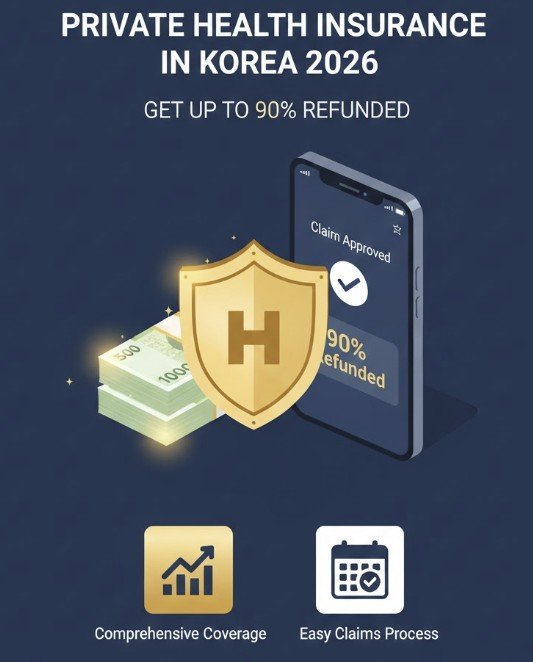
1. NHI vs. Private Silbi: What’s the Difference?
Understanding the dual structure of the Korean medical system is crucial for effective financial planning.
| Category | National Health Insurance (NHI) | Private Indemnity Insurance (Silbi) |
| Nature | Mandatory government-run social insurance | Optional private insurance |
| Coverage | 70–80% of “Reimbursable” items | 70–80% of your remaining balance + Non-reimbursable items |
| Key Benefit | Covers basic consultation and surgery | Refunds expensive MRIs, physical therapy, and injections |
| Claim Process | Instant discount at the hospital counter | Pay first, then claim a refund via a mobile app |
2. Eligibility and Visa Requirements (2026 Status)
Foreigners can apply for private insurance if they are legally residing in Korea, but there are specific prerequisites.
- Alien Registration Card (ARC): You must possess a physical ARC and have stayed in Korea for more than 90 days.
- Visa Codes:
- Easier Enrollment: E-1 to E-10 (Work), F-2 (Resident), F-4 (Overseas Koreans), F-5 (Permanent Resident), F-6 (Marriage Immigrant).
- Review Required: D-2 (Students), D-10 (Job Seekers). While students often have school-mandated group insurance, you can add an individual Silbi for broader coverage.
- Health History: Any major surgeries, hospitalizations, or treatments lasting more than 7 days within the last 5 years may limit your enrollment or exclude certain conditions from coverage.
3. 2026 Market Trend: The 4th Generation “Pay-as-you-use” System
As of 2026, the 4th Generation Silbi is the standard product in the market.
- Premium Differentiation System: The system that adjusts premiums based on your usage of “Non-reimbursable” items is now fully operational. If you rarely use expensive non-covered treatments, your premium is discounted. However, frequent users of expensive therapies (like manual therapy) could see their premiums increase by up to 300% the following year.
- 5th Generation Outlook: Discussions are underway for a 5th Generation Silbi to be launched later in 2026 with adjusted renewal cycles. If you are not in a rush, it might be worth checking the market in the second half of the year.
4. Mandatory Document Checklist for Claims
Filing a claim is now incredibly easy via smartphone apps—funds are often deposited within 24 hours. Before leaving the hospital or pharmacy, ensure you have:
- Detailed Medical Receipt (진료비 영수증): Not the credit card slip, but the official hospital receipt for insurance purposes.
- Itemized Statement (진료비 세부내역서): Shows exactly what treatments were performed.
- Pharmacy Receipt: Usually printed on the medicine bag.
- First Visit Record (초진기록지): May be required for bills exceeding ₩100,000 to verify the cause of the illness.
5. Crucial Note: “No Double-Dipping”
Silbi insurance follows the principle of “Proportional Indemnity.” This means you cannot profit from insurance. If you have two policies, they will split the bill instead of paying you twice. Before signing up, check if your company already provides a Group Insurance (Danche-boheom) policy to avoid wasting money on double premiums.
Official Sources & References
- Financial Supervisory Service (FSS): 2026 Consumer Guide to Private Indemnity Health Insurance.
- Korea Insurance Development Institute (KIDI): Guidelines for the 4th Generation Silbi Premium Adjustment System.
- Ministry of Justice: Legal Guide for Foreign Residents – Insurance Section, 2026.
- HiKorea Official Portal: Mandatory and Optional Insurance Information for Foreigners.