One of the most stressful moments for an expat in South Korea is falling ill and struggling to explain symptoms in a different language. While Seoul has numerous international clinics, professionals and students living in other major cities like Daejeon or Daegu also need reliable access to English-speaking medical services.
Based on the latest 2026 government updates, here is a comprehensive guide to regional international healthcare centers that offer dedicated English administration and medical services.
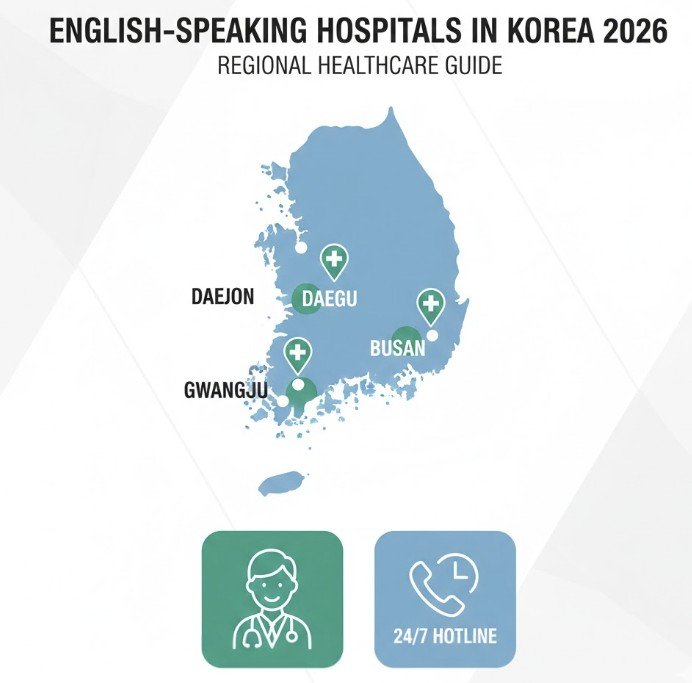
1. Daejeon: The R&D and Medical Hub of Central Korea
As a “Science City” with a high concentration of global researchers, Daejeon offers highly systematic medical services for foreigners.
- Chungnam National University Hospital (CNUH) International Health Care Center:
- Features: The largest national university hospital in the region. Dedicated coordinators guide you through everything from appointment to payment in English.
- Specialty: Advanced treatment for serious illnesses and precision health check-ups.
- Daejeon Eulji University Hospital:
- Features: Conveniently located near Dunsan-dong and Doan New Town. They operate a dedicated window for foreign patients.
- Konyang University Hospital:
- Features: Located in the Western district (Seo-gu), it provides a private waiting lounge for foreigners and issues medical documents in multiple languages.
2. Daegu: The Medical Hub of the Southeast (Medicity Daegu)
Daegu, branded as “Medicity,” has a wealth of experience in treating foreign patients through its prestigious university hospitals.
- Kyungpook National University Hospital (KNUH) International Health Care Center:
- Features: Located in Samdeok-dong and Chilgok. It offers multi-language support and has a streamlined system for international professionals.
- Keimyung University Dongsan Medical Center:
- Features: A massive facility in the Seongseo area. It boasts high satisfaction rates, with dedicated nurses accompanying foreign patients throughout the entire process.
- Yeungnam University Hospital:
- Features: The core medical hub in the Southern district (Nam-gu). It offers specialized health screening programs tailored for international students and high-tech professionals.
3. Other Key Regional Hubs (Busan & Gwangju)
- Pusan National University Hospital (Busan): The backbone of international medicine in the Busan area, featuring a fast-track system for those working in international business and maritime industries.
- Chonnam National University Hospital (Gwangju): The leading hub in the Honam region, operating a dedicated help desk for foreign residents.
4. Utilizing Digital Healthcare Services in 2026
The South Korean government has expanded its digital infrastructure to help foreigners find medical help more easily.
- Emergency Medical Information Service (1339): A 24-hour English consultation line. They can guide you to the nearest English-speaking emergency room based on your current GPS location.
- Korea Travel Hotline (1330): While primarily for tourism, they provide a 3-way interpretation service that can be invaluable when making a hospital appointment or checking a location.
- Goodoc & Ttokdok Apps: Recent updates include enhanced filters for “Foreign Language Consultation.” You can find local clinics where doctors speak English in real-time.
5. Essential Checklist for Your Hospital Visit
- ID and Insurance Card: Your Alien Registration Card (ARC) and National Health Insurance (NHI) info are mandatory for covered treatment.
- Referral Letter (Crucial): To receive full insurance benefits at a “Large General Hospital” (University Hospital), you should first visit a local clinic (1st-tier) and get a Referral Letter. Visiting a large hospital directly may result in significantly higher out-of-pocket costs.
- Request Multilingual Prescriptions: When getting medicine at a pharmacy, ask for English medication instructions. Most pharmacies located in front of large hospitals provide this service.
Conclusion: Preparation is the Best Medicine
A successful life in Korea starts with managing your health risks. We recommend saving the contact information of the nearest international center listed above in your phone. By utilizing the 1339 hotline and keeping your Referral Letter process in mind, you can receive world-class medical care without the language barrier.
Official Sources & References
- Ministry of Health and Welfare (MOHW): 2026 Guide to Attracting Foreign Patients and Medical Services.
- Korea Health Industry Development Institute (KHIDI): Operational Status of International Healthcare Centers Nationwide.
- Daegu/Daejeon Metropolitan City: Status of Designated Foreigner-Friendly Hospitals, Dec 2025.
- National Medical Center: Emergency Medical Portal (E-Gen) Foreign Language Support.